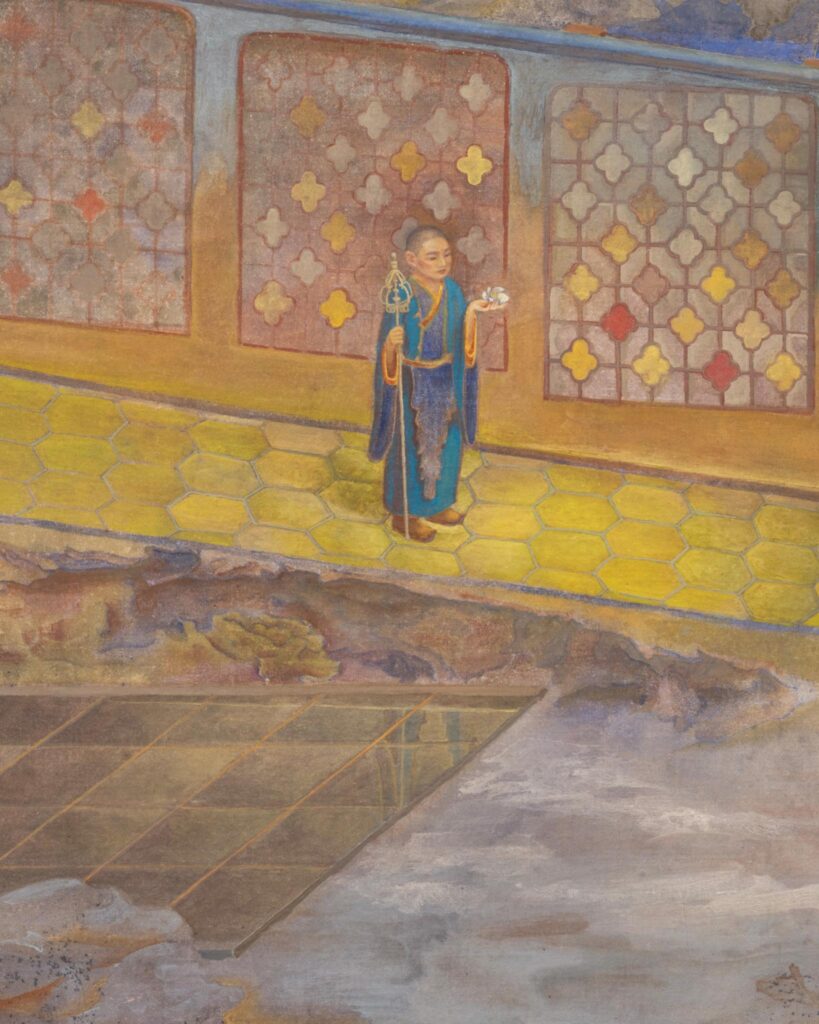
Xuanzang (a native of Gou County, Luozhou) represents the proactive spirit of ancient China’s openness, fearlessness in the face of hardship, and the active absorption of the essence of foreign civilizations.
Worn smooth and polished like a mirror, the floor tiles create a space of “interplay between reality and void. ” The reflection of the Master’s silhouette suggests a parallel spiritual dimension, documenting his historic journey across the East and West.
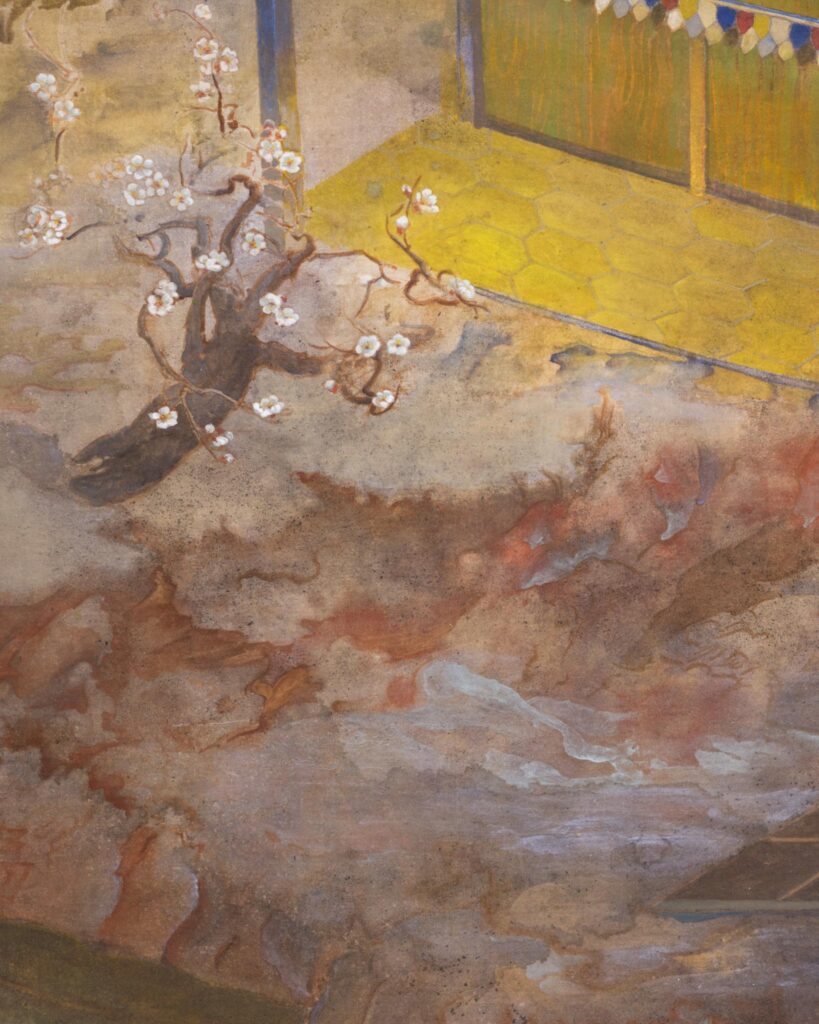
走廊旁,杏花正盛開得如雲似霧。這抹粉白是「自然態」的隨機美感,與寺廟嚴謹的幾何結構形成對比。
Beside the corridor, apricot blossoms bloom in a cloud-like mist. This splash of pinkish-white captures the “natural state” of spontaneous beauty, standing in poetic contrast to the temple’s rigorous geometric structure.
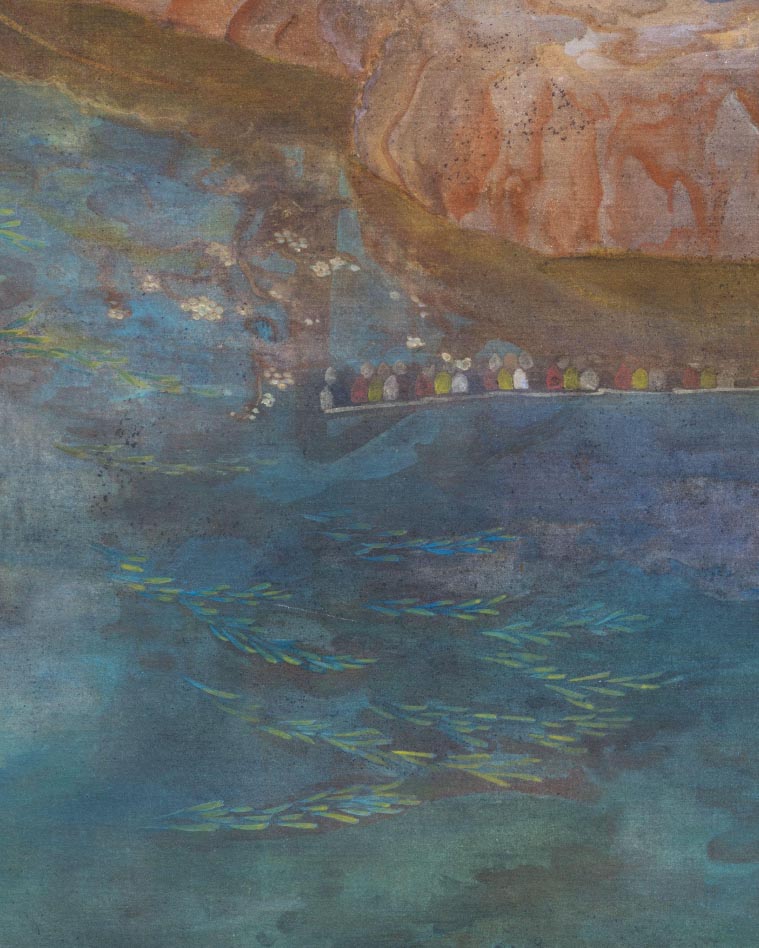
Inspired by the historical grandeur of the Subash Buddhist Temple ruins (Zhaohuli Monastery), this work evokes the classic imagery of “a river separating two temples. “Thewater flows before the sanctuary, mirroring the apricot blossoms and ritual flags along the banks, serving as the very “breath of the space.”